Welcome to MouldWatch
Why Tether and the Quidos Group built MouldWatch: a full-service damp-and-mould response for social landlords, designed to grow with every phase of Awaab's Law.
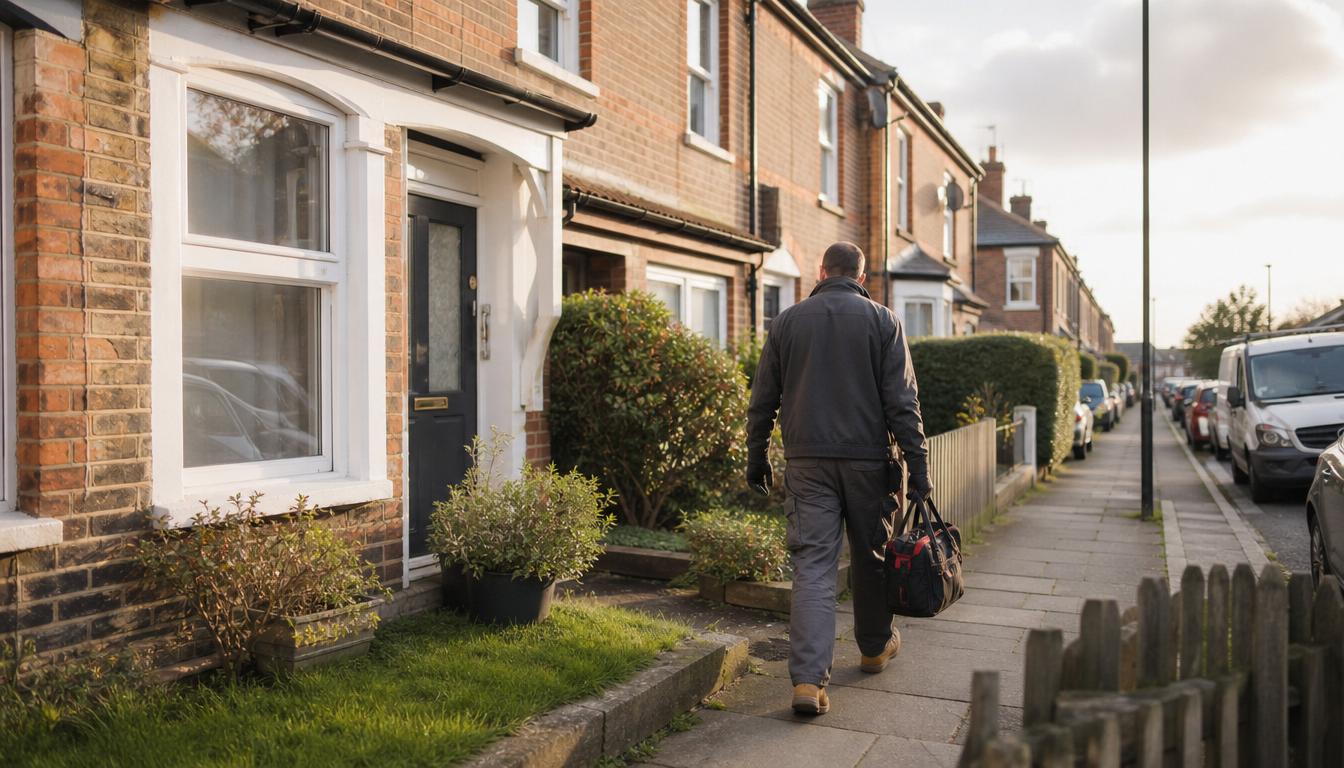
MouldWatch is a full damp-and-mould service for social landlords in England and Wales. Tether and the Quidos Group built it together for one reason: an alert is not enough. To meet your legal duty, you need to spot the problem early, investigate it properly, fix the real cause, and keep proof that you did. MouldWatch does all of that as one service you can hold to account.
The gap we set out to close
Awaab’s Law sets hard legal deadlines - counted in working days - for responding to damp and mould in social homes in England. It is part of the duty introduced by the Social Housing (Regulation) Act 2023, and the clock starts the moment a landlord becomes aware of a hazard. (Wales has its own version, under the Welsh Housing Quality Standard, in force since 1 April 2026.)
For most housing associations and councils, awareness still arrives the way it always has: a resident calls to say there is mould on the wall. By then the mould is visible, the health risk has often already begun, and the clock is running. An alert on its own does not help with any of that - it just opens a job that someone still has to do.
MouldWatch closes the gap at both ends. We see the risk weeks before mould appears. Then you choose: we manage the case through to a checked, finished fix - or we give your own team the tools and the trained people to do it. See the full service →
Two organisations, one service
No single company could build this well. It takes four things: sensors, a risk model tuned to British homes, a skilled team on the ground, and the know-how to turn the work into proof that stands up. That is why MouldWatch is a true partnership, not parts bought in from suppliers.
Tether is a healthy-building IoT and software company. Its sensors and mould-risk algorithm - fine-tuned for the UK housing stock - are what see the problem coming, weeks early.
The Quidos Group is a UK compliance and building-safety specialist. It brings the national field network that investigates and remediates, and - just as importantly - the competence framework behind it.
Experience that runs deeper than mould
Quidos has spent its history at the technical heart of UK housing. As a government-approved energy-assessment accreditation scheme, it has long understood what sits underneath damp and mould: why homes lose heat, why some cost so much to keep warm, and how a cold, hard-to-heat home slides into condensation, poor health and fuel poverty.
Quidos Protect now brings that expertise straight into damp and mould. It is structured training and certification that raises the standard of the people doing the work - across condensation, penetrating damp, rising damp, and the root-cause repairs that actually fix them.
This matters, because Awaab’s Law is, in the end, about doing the job properly: the right diagnosis, the right fix, and a clear record of both. MouldWatch’s field network is trained and certified to that standard - and the same framework can lift your own in-house team rather than replace it.
Built for every phase of Awaab’s Law
Phase 1 is live now. It covers damp and mould. The duty then widens in stages: Phase 2 in 2026 adds excess cold and heat, falls, fire, electrical and other hazards; Phase 3 in 2027 covers the rest. The private rented sector follows under the Renters’ Rights Act 2025.
We built MouldWatch for that whole horizon, not just today’s headline hazard. Excess cold is where this partnership’s depth shows most clearly: sensing indoor conditions, reading a home’s energy performance, and acting on cold, damp homes is exactly where Tether’s data and Quidos’s energy heritage meet. As the law grows, the same five steps grow with it: sense, predict, investigate, fix, and prove. See what Phase 2 and 3 cover →
What we are really trying to do
This law carries a child’s name. Awaab Ishak was two years old when he died from prolonged exposure to mould in his family’s home. Behind every statutory deadline is a person living in conditions that should never have been allowed to persist.
Tether and the Quidos Group did not build MouldWatch to sell sensors. We built it to solve a real problem, to give the teams carrying this legal duty something that genuinely takes work off their plate, and - the part that matters most - to improve the homes and the lives of the people inside them. Healthier homes. Residents treated with respect. And a record that proves the job was done.
If you would like to see how it fits together, book a demo or walk through the full service.